Esperanto-Schnupperkurs
ein Einblick in die lebende Plansprache Esperanto
Rafaelo Daŝgupto (Raphael Das Gupta)
2026-06-14
slides online
English ses-ch.github.io/Schnupperkurs

Deutsch / German: ses-ch.github.io/Schnupperkurs/index-de.html
Source code: github.com/SES-CH/Schnupperkurs
based on
«39c3 Esperanto course»
by
Eva Fitzelová 🇸🇰 · Johannes Mueller 🇩🇪
Introduction
Quick facts
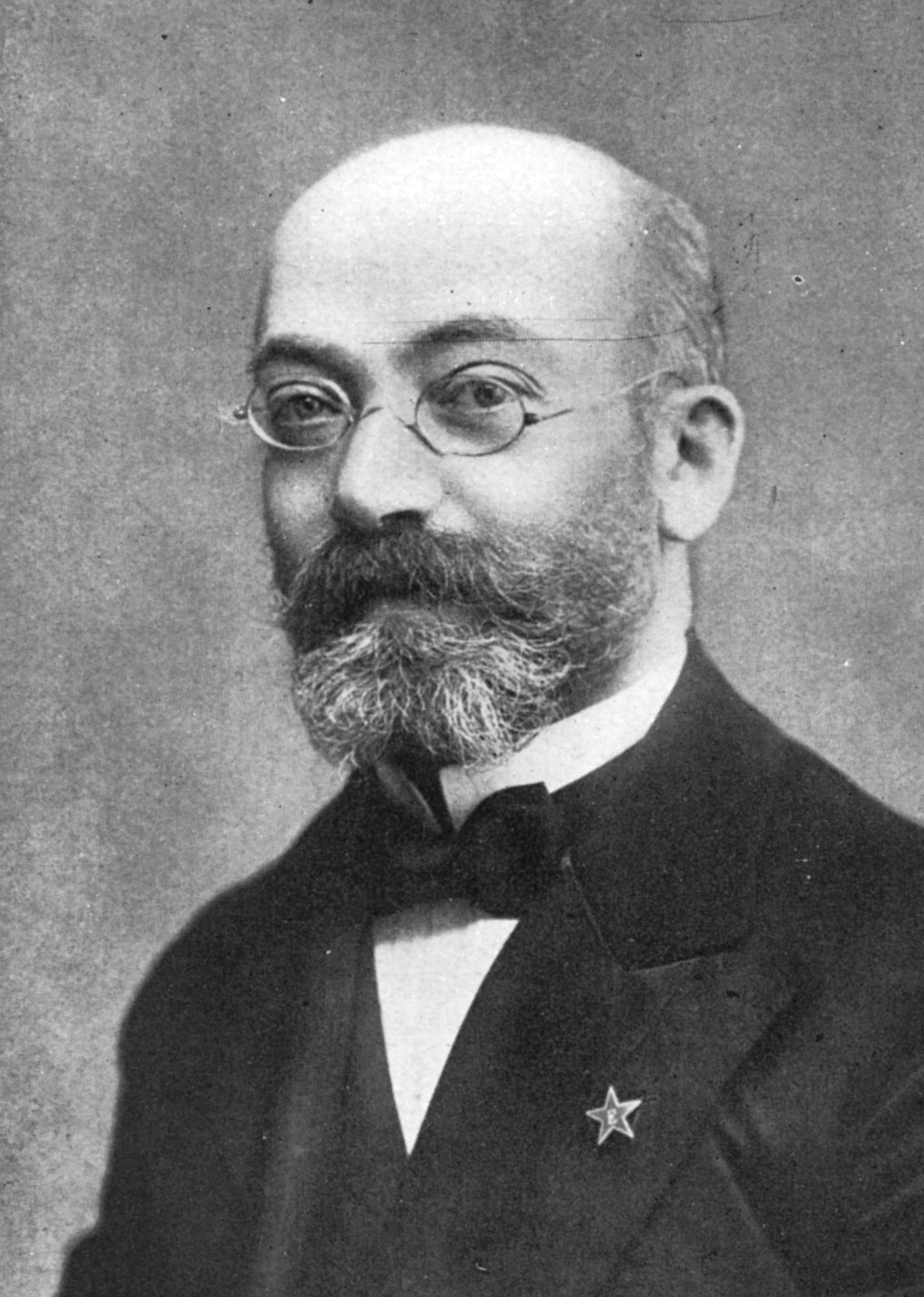
- released 1887 by L. L. Zamenhof, Poland (at the time occupied by Russia)
- number of users:
- 103 natives
- 105 fluent regulars
- 106 “started to learn”
- spoken everywhere in the world; slight focus on Europe
- language code:
eo,epo- lots of localized software: WordPress, Hunspell, LibreOffice, Firefox, KDE, …
Language features
- phonetic alphabet
- origin of word roots
- ⅔ Romanic
- ⅓ Germanic
- some Slavic, ancient Greek, Hebrew
- simplistic grammar
- powerful word building system
Sample text
Hodiaŭ mi donas kurseton pri Esperanto kadre de KoSino en Villa Ritter. Villa Ritter estas junulara renkontejo kaj kulturcentro en Bielo.
KoSino estas ĉiujara evento de la ĥaoskomputila klubo svisa.
Alphabet and phonetics
Rules
- bijective mapping between letter and sound
- stress on second last syllable
- exactly one syllable for every vowel
- no long or short vowels
The alphabet
Based on Latin alphabet, but
- no “w” – just “v” (Vindozo)
- no “x” – “ks” is used instead (Linukso)
- no “y” – just “i”
- “c” is like the German “z” (/t͡s/)
- “z” is like the English “z” (voiced)
Some special characters (diacritics)
- ŝ – like English “sh” like in “fish”
- ĉ - like the “ch” in English “ouch”
- ĝ – like the “j” in English “jungle”
- ĵ - like the “j” in French or German “Journalist”
- ĥ - like the “ch” in German “Bach”
- ŭ – like “u” (half vowel)
The letters “j” and “ŭ” are so called half vowels. They’re pronounced almost like the vowels “i” and “u”, but don’t form a syllable of their own, but a diphthong.
Some grammar basics
Personal pronouns
| 1 | > 1 | |
|---|---|---|
| mi | ni | |
| vi | ||
| ♂ li | ili | |
| ♀ ŝi | ||
| ☐ ĝi | ||
| ⚧ ri* | ||
| ? | oni | |
* for now unofficial
Verbs
Verb endings
- infinitive: -i (esti, nomiĝi, plaĉi)
- present tense: -as (estas, nomiĝas, plaĉas)
- past tense: -is (estis, nomiĝis, plaĉis)
- future tense: -os (estos, nomiĝos, plaĉos)
- conditional / irreal: -us (estus, nomiĝus, plaĉus)
- wish / command: -u (estu, nomiĝu, plaĉu)
vidi, aŭdi, ami, manĝi, trinki, drinki, …
Mi amas vin. – Ni trinkas ĉunkon. – Ili manĝas picon.
Nouns
- -o (kongreso, kurso, lingvo, tablo, seĝo, fenestro, pomo, …)
- plural: -j (kongresoj, kursoj, lingvoj, tabloj, seĝoj, fenestroj, pomoj, …)
Adjectives
- -a (bela, granda, ruĝa, verda, kongresa, dolĉa, plaĉa)
- plural: -j (belaj, grandaj, ruĝaj, verdaj, kongresaj, dolĉaj, plaĉaj)
Hamburgo estas granda urbo. – Bielo estas bela.
Derived adverbs
- -e (bele, grande, ruĝe, verde, kongrese, dolĉe, plaĉe)
La kanto estas bela kaj ŝi bele kantis ĝin.
Yes/No questions
- Ĉu vi ŝatas la kongreson?
- Jes, mi ŝatas la kongreson. / Ne, mi ne ŝatas la kongreson.
Accusative
-n
Marks the direct object. Examples:
- Mi amas vin
- Ĉu vi ŝatas la kongreson?
- Ŝi manĝas dolĉajn pomojn.
Can also do other things, e.g. indicate direction instead of location:
- Mi dancas en la dancejo. — I am dancing in the dancing room.
- Mi dancas en la dancejon. — I am dancing into the dancing room.
Esperanto avoids ambiguities
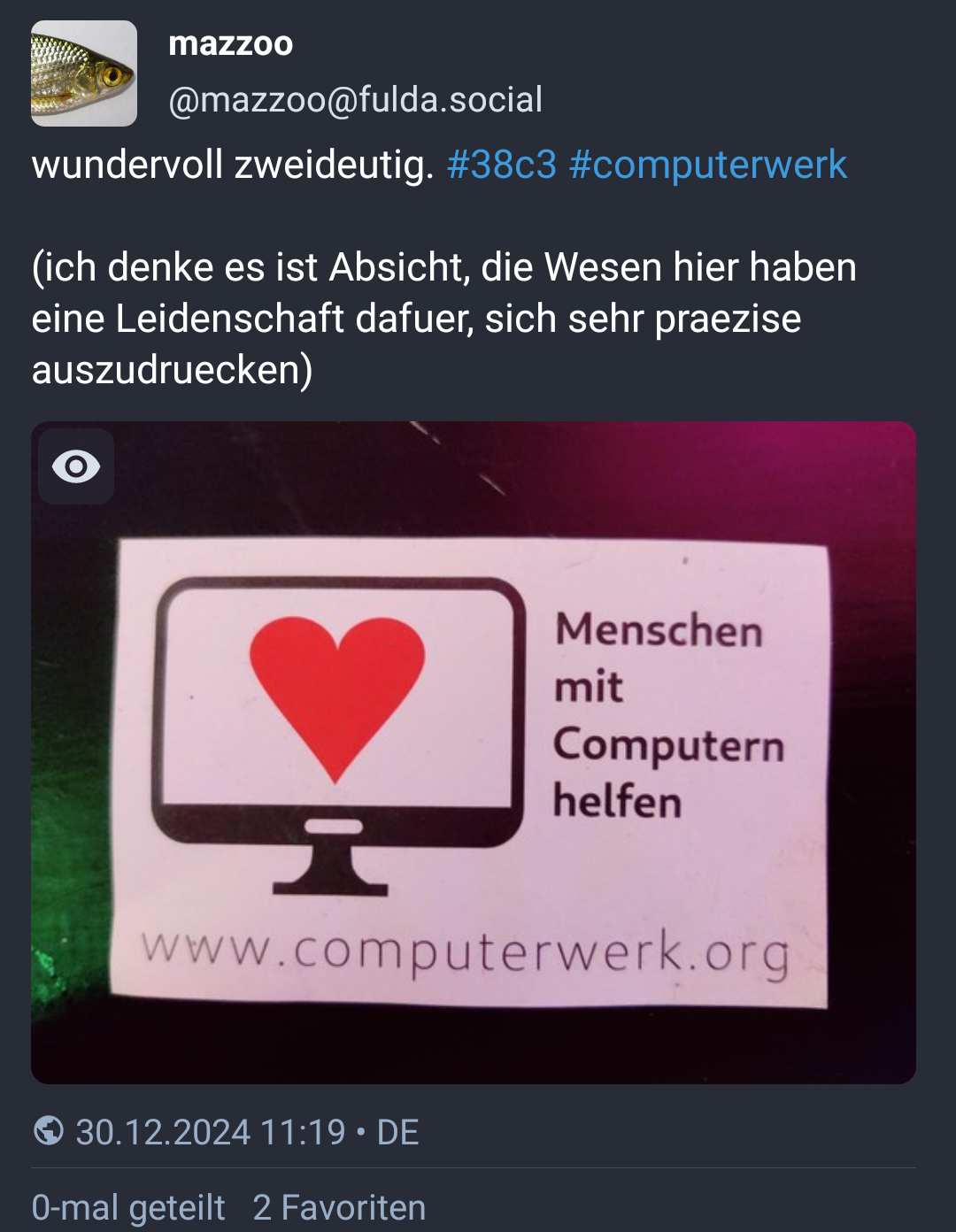
- Homoj kun komputiloj helpas.
- (Homoj per komputiloj helpas.)
- Homojn kun komputiloj helpi
- Homojn per komputiloj helpi
Affixes
- -eg-: granda → grandega — big → huge
- mal-: granda → malgranda – big → small
Hamburgo estas grandega urbo. – Püttlingen estas malgranda urbo.
The power of affixes
| -in- | vir- | -id- | -ar- | -ej- | -ist- | ||
|---|---|---|---|---|---|---|---|
| ♀️ | ♂️ | 👶 | {⚫⚫⚫⚫} | 🏠 📍 🛒 | 👷 | ||
| ŝafo | 🐑 | ewe | ram | lamb | flock | sheepfold | shepherd |
| hundo | 🐕🦺 | bitch | dog | puppy | pack | kennel | dog keeper |
| bovo | 🐄 | cow | bull | calf | herd | cowshed | cowherd |
| ĉevalo | 🐎 | mare | stallion | foal | herd | stable | horseman |
| -in- | vir- | -id- | -ar- | -ej- | -ist- | ||
|---|---|---|---|---|---|---|---|
| ♀️ | ♂️ | 👶 | {⚫⚫⚫⚫} | 🏠 📍 🛒 | 👷 | ||
| ŝafo | 🐑 | ŝafino | virŝafo | ŝafido | ŝafaro | ŝafejo | ŝafisto |
| hundo | 🐕🦺 | hundino | virhundo | hundido | hundaro | hundejo | hundisto |
| bovo | 🐄 | bovino | virbovo | bovido | bovaro | bovejo | bovisto |
| ĉevalo | 🐎 | ĉevalino | virĉevalo | ĉevalido | ĉevalaro | ĉevalejo | ĉevalisto |
| -il- | -ej- | -ist- | -ind- | -em- | -ul- | ||
|---|---|---|---|---|---|---|---|
| 🪛🛠🔬 | 🏠📍🛒 | 👷 | worth | inclined | 🙋 | ||
| lerni | learn | lernilo | lernejo | lernisto | lerninda | lernema | lernemulo |
| manĝi | eat | manĝilo | manĝejo | manĝisto | manĝinda | manĝema | manĝemulo |
| muziko | music | muzikilo | muzikejo | muzikisto | muzikinda | muzikema | muzikemulo |
| naĝi | swim | naĝilo | naĝejo | naĝisto | naĝinda | naĝema | naĝemulo |
| haki | hack | hakilo | hakejo | hakisto | hakinda | hakema | hakemulo |
Correlatives
| ki- | ti- | ĉi- | i- | neni- | |
|---|---|---|---|---|---|
| ? | ! | all | some | none | |
| 📦 | what | that | everything | something | nothing |
| welch- / 🙋 | which/who | that (one) | all | some | no(-one) |
| 🟢🟥💛🔷 | what kind | that kind | all kind | some kind | no kind |
| 🐌 / 🏃 | how | thus | anyhow | somehow | no way |
| 🗺📍 | where | there | everywhere | somewhere | nowhere |
| 🗓️ 🕰 | when | then | always | some time | never |
| 💣 ⟹ 💥 | why | therefore | f every rsn | f some rsn | f no rsn |
| 🔢 | how much | that much | all | some | none |
| 🏷 | whose | that person’s | everyone’s | someone’s | no-one’s |
| ki- | ti- | ĉi- | i- | neni- | ||
|---|---|---|---|---|---|---|
| ? | ! | all | some | none | ||
| -o | 📦 | kio | tio | ĉio | io | nenio |
| -u | welch- / 🙋 | kiu | tiu | ĉiu | iu | neniu |
| -a | 🟢🟥💛🔷 | kia | tia | ĉia | ia | nenia |
| -el | 🐌 / 🏃 | kiel | tiel | ĉiel | iel | neniel |
| -e | 🗺📍 | kie | tie | ĉie | ie | nenie |
| -am | 🗓️ 🕰 | kiam | tiam | ĉiam | iam | neniam |
| -al | 💣 ⟹ 💥 | kial | tial | ĉial | ial | nenial |
| -om | 🔢 | kiom | tiom | ĉiom | iom | neniom |
| -es | 🏷 | kies | ties | ĉies | ies | nenies |
Some important “small” words
- kaj – and
- aŭ – or
- la – definite article
- al – to
- de – from/of
- ke – that (as a conjunction, not as pronoun)
- en – in
- el – out (of)
- da – of (to indicate a quantity)
- kun – with · sen – without
- …
Participles
| concurrent | before | after | |
|---|---|---|---|
| active | -ant- | -nt- | -ont- |
| passive | -at- | -it | -ot- |
La pasinta KoSino okazis 2026.
La venonta KoSino okazos 2028.
KoSino estas bone organizita kaj organizata.
Resources
Learning
Groups
- Telegram
- StackExchange
- Mastodon instance
- Amikumu – an app to meet Esperanto speakers nearby
- Pasporta Servo – a kind of Esperanto couch surfing
Music
- Awesome Esperanto music videos
- Vinilkosmo – Music label
- Song lyrics
- Eternan lumon - Jonny M - Album “Regestilo”
- Samideano - ETERNE RIMA (Tokio/Tokyo)
- Abatejo – Amon mi bezonas
- Martin kaj la talpoj - Gefratoj
- i.d.c. - La fina venk’
- i.d.c. - Tatua papili’
- i.d.c. - Berlino sen vi
- i.d.c. – La nokta stirado
- LPG - La Kosma Aventuro
- Supernova - La postrompiĝa temp’
- Gijom - La postrompiĝa temp’
- Gijom - Kortuŝa Eksces’
Videos podcasts etc.
- Studio
- kern.punkto – our own podcast
- Esperanto natives
- TEJO Esperanto
Congresses, meetups (small selection)
Contact
Esperanto in Switzerland
- SES — Svisa Esperanto-Societo
- CDELI — Documentation Center in La Chaux-de-Fonds
- KCE
- Granda Ursino — private school
- various local clubs, associations, societies
Koran dankon – Thank You!